
CASE 002Seller platform · Social commerce
Swiggy Minis: a simpler front door for small businesses
A seller-platform story about turning social attention into a credible storefront, an operable catalogue, and a direct customer relationship—without asking a small business to assemble its own commerce stack.
Read the decision story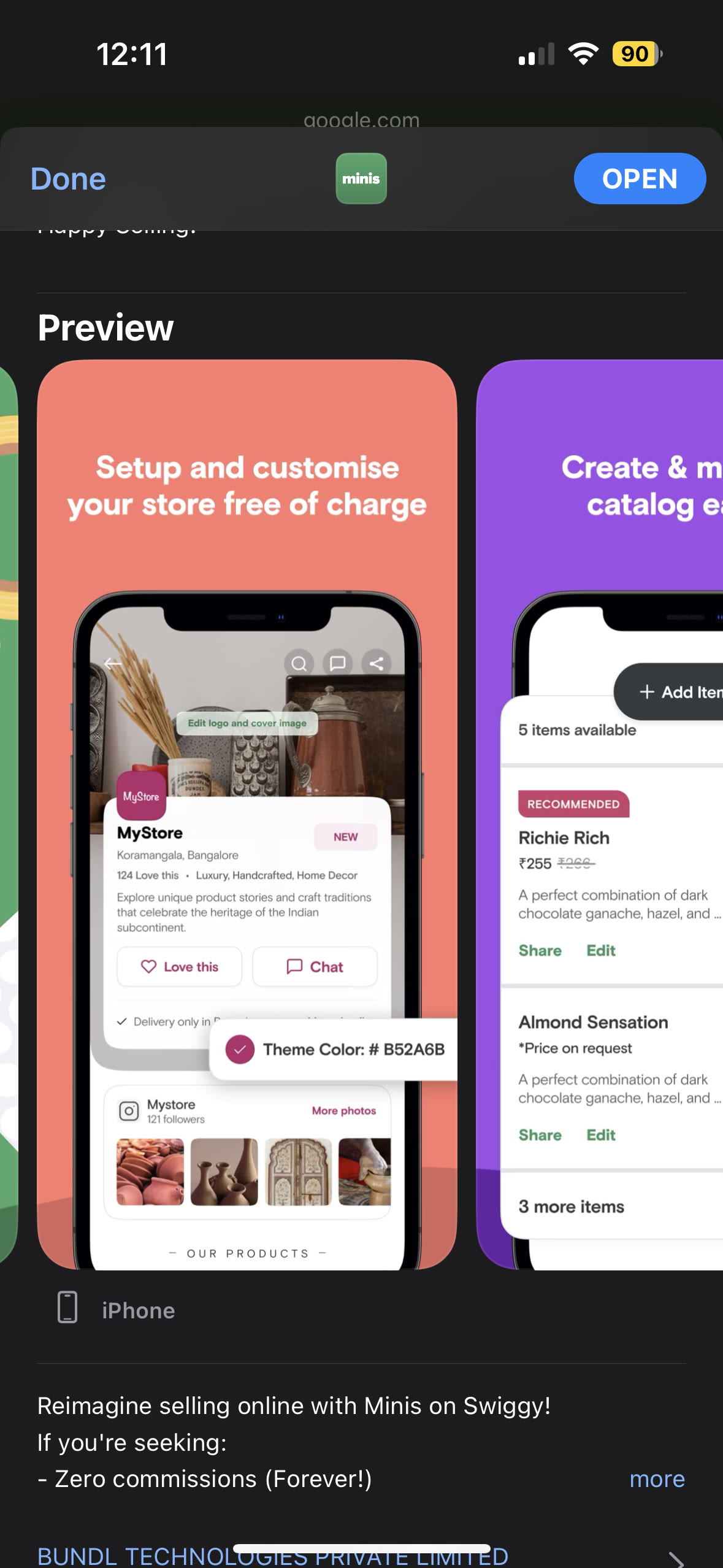

The situation
Selling online was a chain of manual hand-offs.
A customer might discover a product in a social post, ask for details in a direct message, pay through a separate link, and wait for the seller to arrange shipping manually. Each hand-off created work for the seller and uncertainty for the customer.
The opportunity was to create a credible front door without taking away the identity and direct distribution that made these businesses distinctive.
What is the smallest useful commerce system a social-first seller can actually run every day?
Executive summary
Many independent sellers already had attention on Instagram or WhatsApp. What they lacked was a dependable bridge from discovery to catalogue, order, payment, delivery, and repeat customer contact.
Minis gave those businesses a shareable online presence and the operating tools behind it. The product evolved from a storefront proposition into a broader set of seller-led discovery and social-selling capabilities.
The work reinforced a practical lesson: a beautiful storefront is only the visible edge of a seller product. The real product is the daily operating loop behind it.
The decisions
Three moves that shaped the product.
Give the seller a place they can make their own
Store identity, cover imagery, catalogues, descriptions, and a shareable link helped a business look coherent without commissioning a website. Customisation mattered because the seller—not the platform—was the brand.
Connect presentation to operations
Catalogue management, order acceptance, delivery choices, chat, discounts, and seller education lived close together. The goal was to reduce the number of tools required to complete one customer promise.
Design distribution around seller behaviour
Shareable stores, personalised carts, product tags, and visual highlights met sellers where demand already began: social content and direct conversations. Distribution was treated as a product surface, not a marketing afterthought.
Product artifacts
What to notice in the interface.
These are selected public-facing screens. Captions focus on the product choice—not confidential performance data.
The initial promise joined a customisable storefront with the tools needed to sell through it.
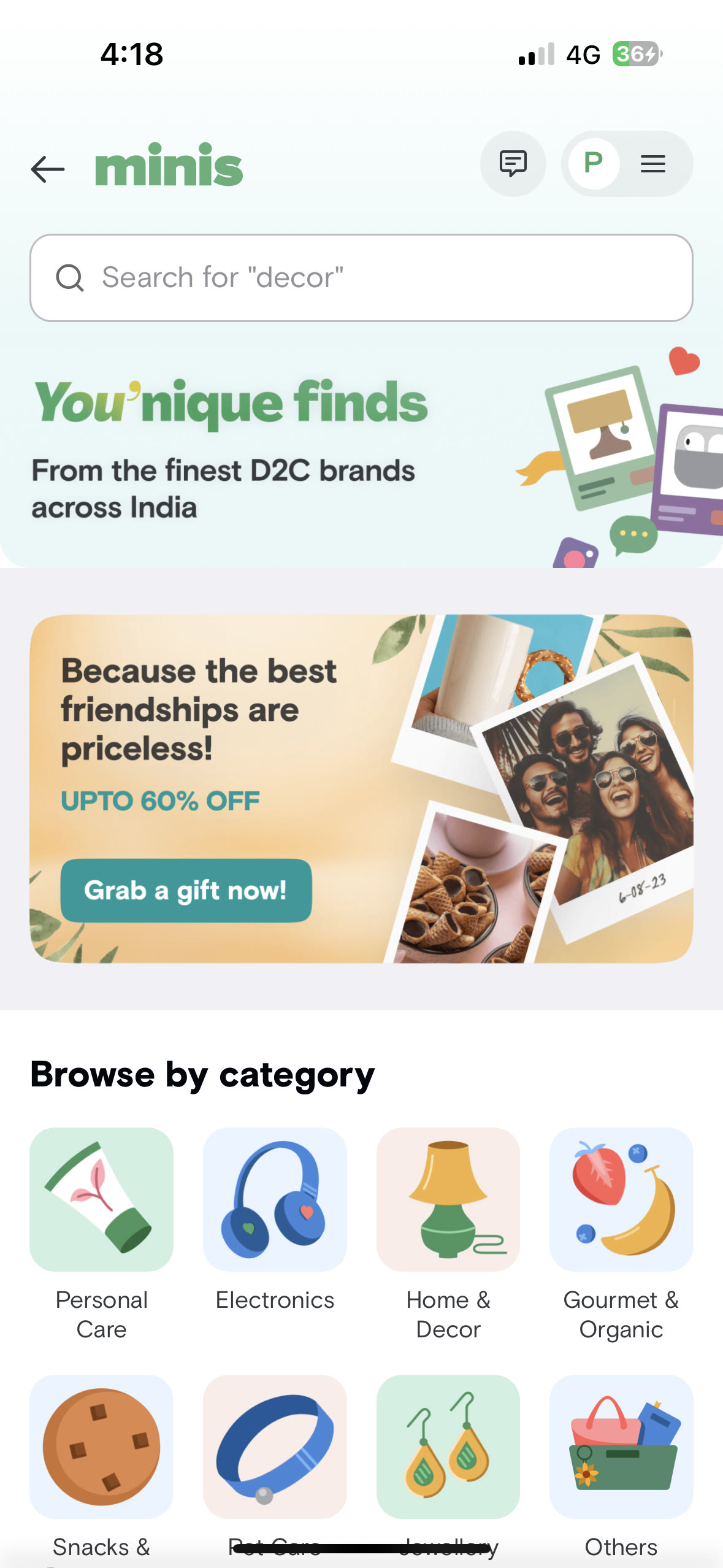
A discovery layer helped customers move beyond a single shared link and explore brands by intent.
Seller cards balanced platform-level merchandising with the visual identity of each business.
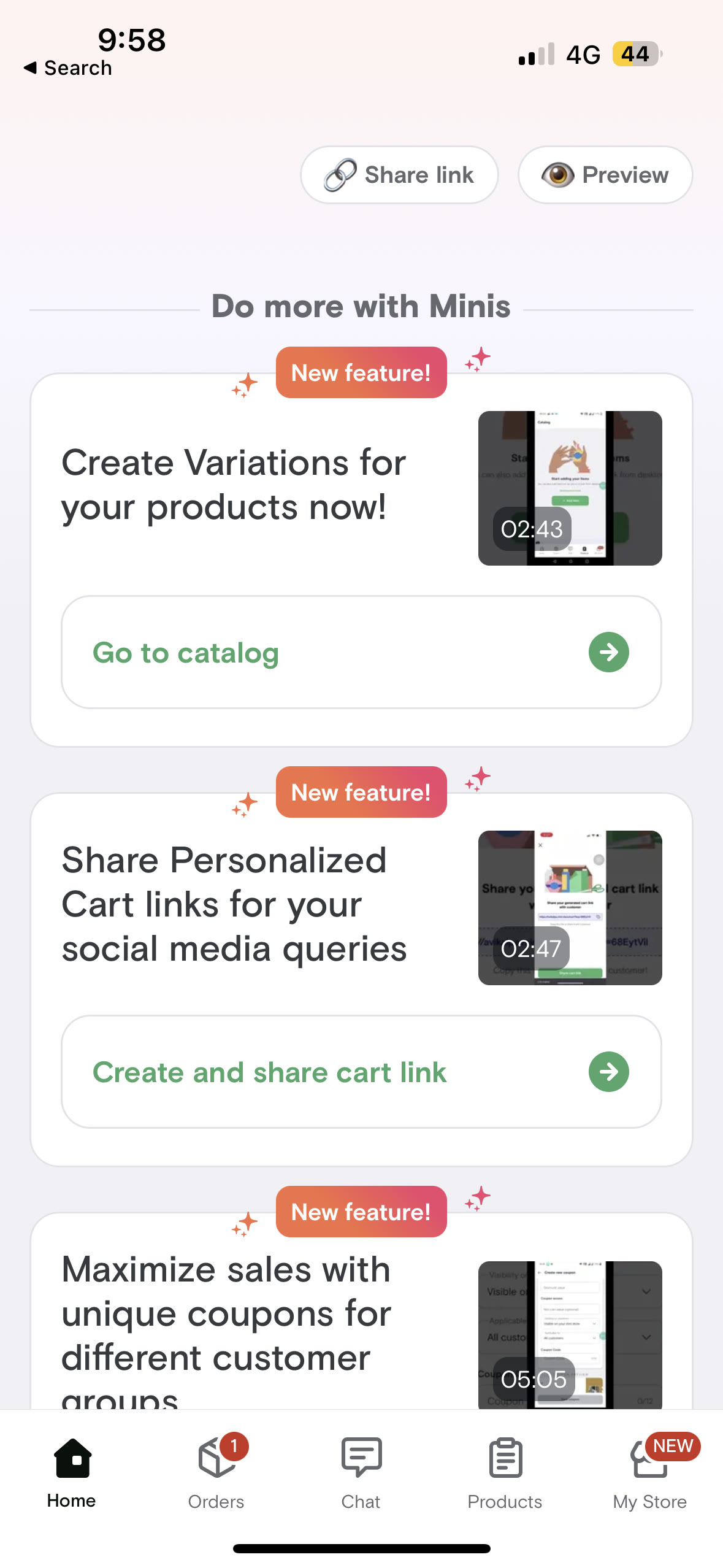
The seller surface translated customer questions into concrete actions: configure, share, and fulfil.

Later tools brought social content patterns into the storefront, making the business easier to understand at a glance.
Outcome · public-safe
The product shipped, expanded, and eventually reached an end.
Swiggy publicly described Minis as a zero-commission seller platform with catalogues, order acceptance, and logistics options. The experience later moved toward a link-in-bio style presence with stronger social-selling tools.
Minis was subsequently sunset. That full lifecycle is part of the case: shipping is not the only evidence of product judgment. How a product evolves, what it teaches, and how customers are given a clear ending matter too.
A social audience gets a transaction-ready destination
Seller identity survives platform standardisation
Operations and distribution live in one working loop
Reflection
What travelled with me.
Seller software is a workflow product
The storefront attracts attention, but repeat value comes from helping a seller manage catalogues, questions, orders, fulfilment, and customer relationships with less coordination overhead.
Distribution belongs inside the product
For social-first businesses, sharing, tagging, and responding are not acquisition add-ons. They are core product behaviours and should shape the information architecture from the beginning.
A sunset can still produce durable learning
Ending a product does not erase the customer insight or the operating systems built along the way. The useful question is which lessons should travel into the next product decision.
Evidence boundary
Useful detail without internal detail.
This case study uses public product screens, published company context, and qualitative product reasoning. It intentionally omits internal metrics, commercial data, roadmaps, and confidential operating details.